Recognizing Each Other to Build: Coming Together Is Also a Way to Transform
First Gathering of LILAS Fund Organizations | September 2026
What happens when organizations working to defend the rights of girls, boys, and adolescents get the chance to meet beyond projects, reports, and work agendas?
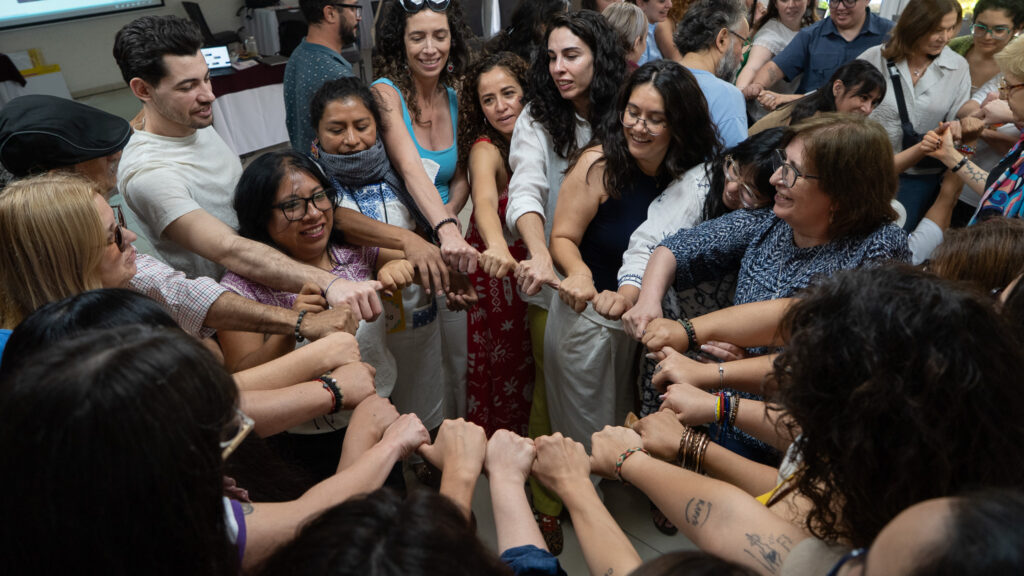
In September 2026, Hispanics in Philanthropy convened the first gathering of Fondo LILAS—an initiative that supports and strengthens organizations transforming how sexual violence against children and adolescents is addressed in Latin America. Titled Reconocernos para Construir (Recognizing Each Other to Build), the event offered a moment to pause, bringing together individuals from diverse regions and backgrounds. It served as a reminder that behind every organization are people sustaining struggles, often within complex and challenging contexts.
The invitation was simple, yet deeply meaningful: to recognize one another in our stories, struggles, and hopes; to share what we have learned; to name the challenges we face; and to discover what we can build together from what unites us, without setting aside our differences.
Because building a network doesn’t happen just by sharing a cause or belonging to the same fund. It takes time, deep listening, trust, and also the conditions to meet as people, beyond our day-to-day responsibilities.
Beyond Funding: Building Relationships Grounded in Trust
In philanthropy, we often talk about strengthening capacities, fostering partnerships, and supporting processes of transformation. Yet we rarely stop to consider the relational conditions that make all of that possible. How is trust built between organizations working in different contexts? What changes when funding becomes an opportunity to develop processes rooted in organizations’ own realities and priorities?
During the gathering, these questions found answers in conversations, exchanges, and shared experiences. The diversity of the group enriched our reflections and allowed us to recognize both our affinities and the different ways we understand and confront the challenges of our work.
One of the most significant aspects was observing a space of trust take shape, little by little. Participants shared experiences, knowledge, needs, and also limits. There were moments of deep tenderness, when the stories of other compañeras moved us and helped us recognize that, although our paths are not the same, there are experiences and concerns that bring us closer.
The gathering left us with reflections from the organizations about what being part of LILAS has meant to them. Having gone through funding experiences that were at times complex and even harmful, some highlighted the opportunity to carry out their work freely, from a place of trust, while building increasingly strong and committed alliances with other organizations.
Hearing these experiences allowed us to recognize something at the heart of our commitment with the Fund: funding is not the only thing that matters. It also matters how we build relationships, how we walk alongside their processes, and how much room we give organizations to define their own paths. We believe that philanthropy committed to social transformation must be willing to examine its own practices and power dynamics, in order to create conditions that strengthen organizations’ autonomy and allow them to carry out their work on their own terms.
Caring for Ourselves Is Also Part of Our Work
Those who work for human rights and social justice know well what it takes to sustain these struggles. Accompanying others, responding to contexts of violence, defending rights, and building collective alternatives requires energy, commitment, and an enormous capacity to keep going, even in difficult circumstances.
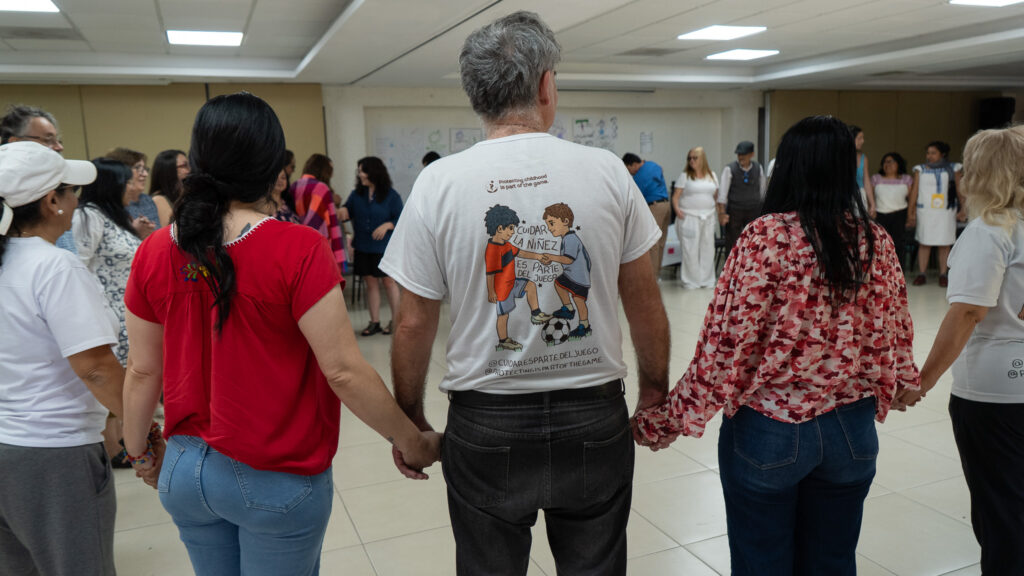
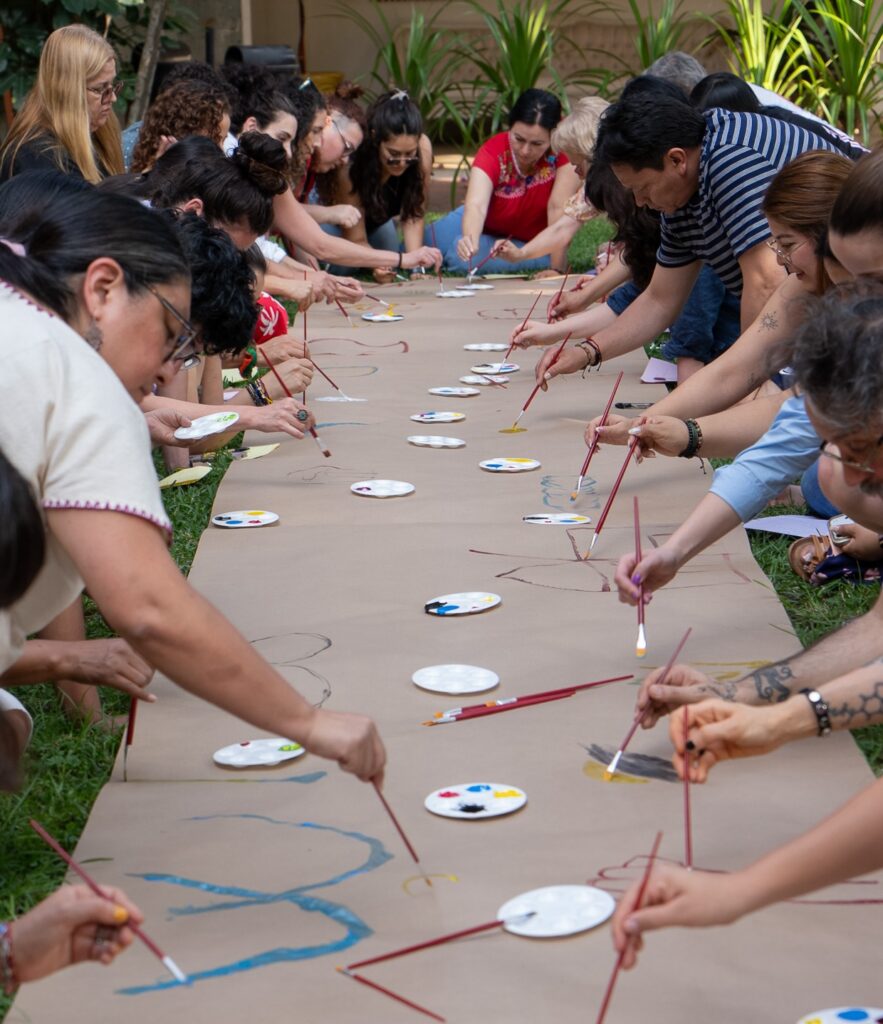
Yet there are rarely spaces to acknowledge the toll, express our needs, and allow ourselves to receive the care we so often give. During the gathering, we wanted to make room for that. Through creative, embodied, and collective activities, we explored other ways of getting to know one another, listening, and supporting each other.
One of these was a “buddy system” exercise, which sparked a willingness to get to know another person, look out for her, and accompany her throughout our days together. Above all, it offered a chance to explore something that isn’t always easy: recognizing what we need from others and allowing ourselves to be cared for. This experience reminded us that collective care emerges from the groups themselves: in attentive listening, in sensing when a conversation needs a pause, in respecting what someone chooses to share, and in being able to accompany one another without demanding that we always be available.
From this perspective, care is not an add-on to our work, nor a reward that comes after fulfilling all our responsibilities. It is part of the conditions that make it possible to sustain that work over time.
Recognizing Each Other Also Means Discovering What We Can Build Together
Over the course of the gathering, conversations opened connections between organizations that, despite starting from different contexts and experiences, found resonance in their causes, lessons, and challenges. New questions emerged, along with possible collaborations and an interest in continuing to share methodologies, experiences, and tools.
The point was not to force alliances or leave the gathering with a list of predetermined commitments. It was to create the conditions for the organizations themselves to recognize where affinities exist, what they can learn from one another, and which bridges are worth exploring.
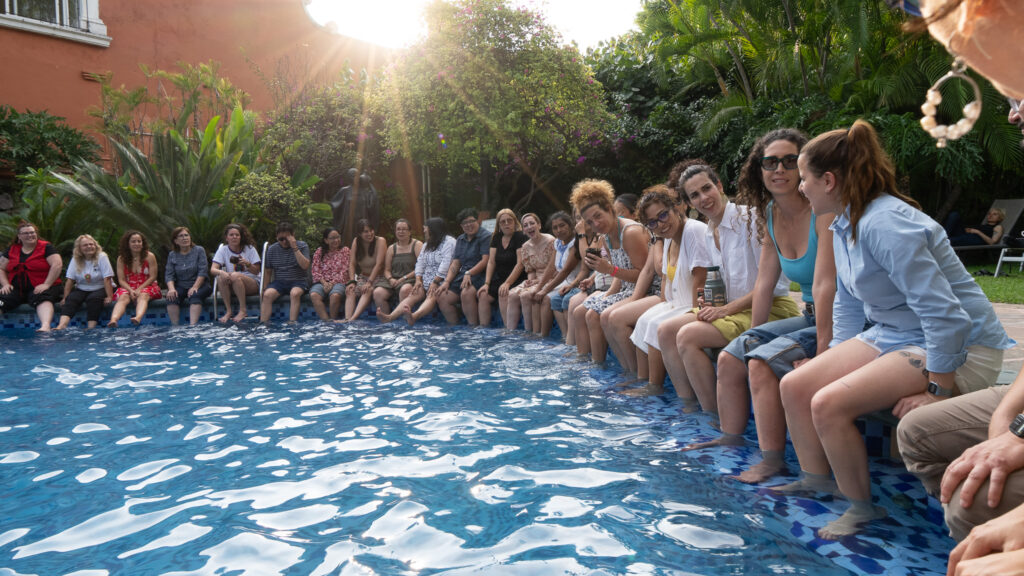
Perhaps one of the moments that best captured this process of collaboration and camaraderie came at the very end. When it was time to wrap up, the group wanted to stay in the pool rather than return to the meeting room for the planned closing. Thus was born what we called, amid laughter, “el plantón”, the sit-in.
That decision showed us that the group had made the space its own, had built a sense of complicity, and wanted to say goodbye in its own way. It was no longer just about following an agenda, but about recognizing the value of staying together a little longer and creating a shared memory.
For us, that moment was a concrete expression of the trust that had been woven over those days, trust that made it possible for the participants themselves to propose, decide, and transform the experience according to their own needs and desires.
A Network Built Over Time
Reconocernos para construir was much more than an opportunity for organizations to exchange experiences. It was a space to make visible the bonds, resources, and forms of care that already exist among the members of the LILAS Fund, and to open new possibilities for mutual support and collaboration.
Participants’ voices spoke to us of hope, tenderness, solidarity, strength, and commitment. And of the certainty of not being alone. These words carry particular meaning in a context where defending the rights of girls, boys, and adolescents demands sustained collective effort, learning from other experiences, and building responses to challenges that no organization should have to face in isolation.
Bonds need time, opportunities to reconnect, and conditions that allow trust to translate, when organizations so choose, into concrete exchanges and collaborations. That is why this first gathering is not a destination, but an opening to keep building.
At HIP, we believe philanthropy can and must help create these conditions. Not only through financial resources, but also through relationships that are transparent, flexible, and committed to organizations’ autonomy. Relationships that recognize that those who sustain the struggles know their contexts, build their own strategies, and need spaces to come together, learn, and decide collectively.