Bartering Stories, Knowledge, and Resistance: Chronicle of HIP’s Tenth Partners Meeting
By Abril Juárez
Of the ten meetings that HIP's Gender program has held to bring its partners together, I've had the fortune of attending four to document the feelings and thoughts of the participants. And I say fortune because being there truly is just that: an immeasurable richness. Listening to the leaders of civil society organizations and feminist collectives in Mexico who work every day to secure a little more justice, a little more dignity, a little more joy for the communities they work with — women survivors of violence, migrants, sex workers, indigenous populations, among many others — is a reminder of why this work matters.
The meeting has always been this: a space for connection, a breath of relief from the rage, the exhaustion, the injustice that comes from watching so many organizations do too much to fill the gaps left by the state, sometimes with very little. This tenth edition took that spirit one step further.
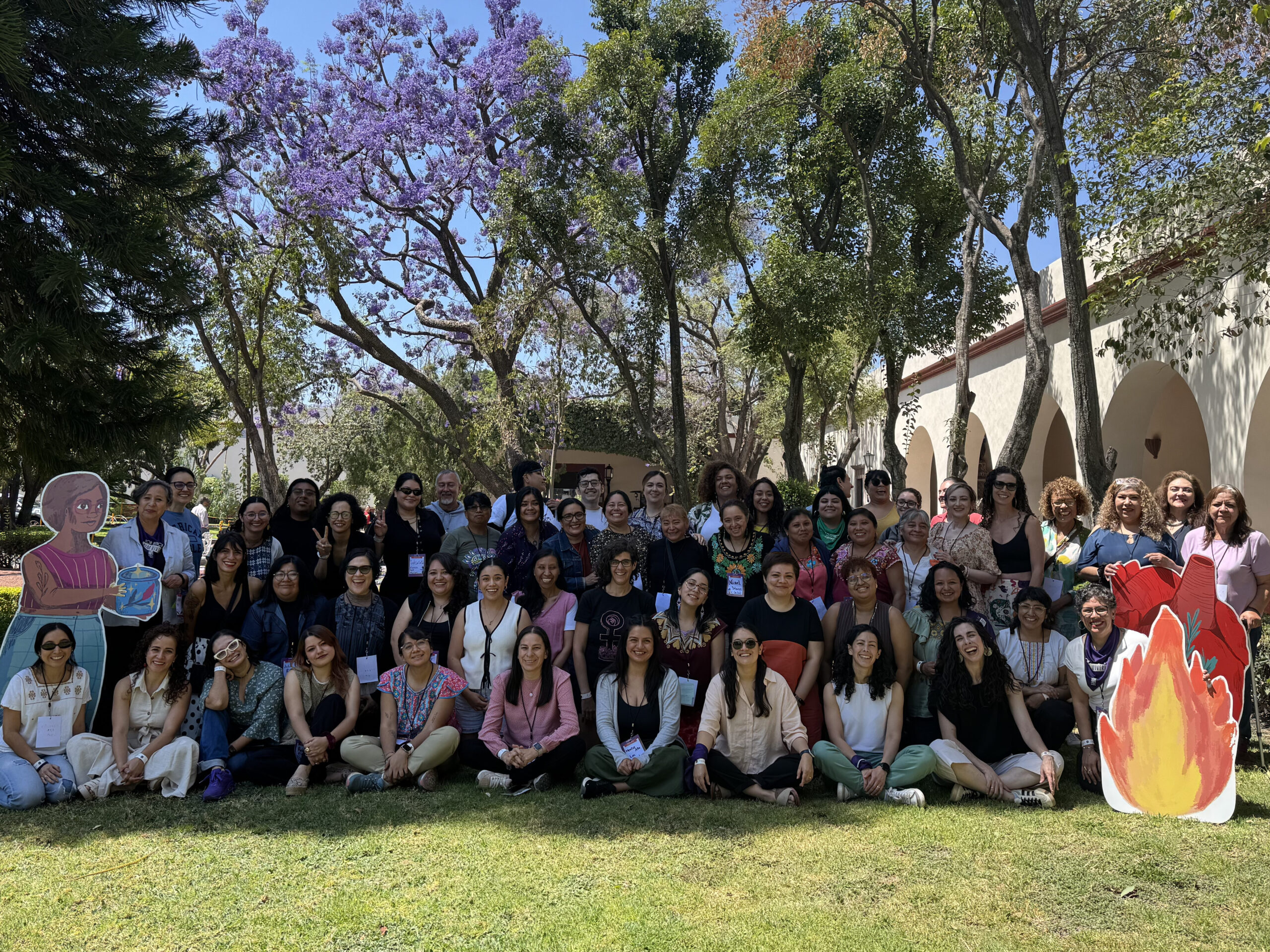
In addition to being the first held in the semi-arid city of Querétaro, with the gardens and corridors of Hacienda Jurica as the setting, it was also the first in which partner organizations had the opportunity to shape the agenda: leading workshops, facilitating conversations, sharing their methodologies and knowledge among themselves. From that genuine exchange, the title Bartering Stories, Knowledge, and Resistance was born.
This tenth edition brought together 31 participating organizations over three days. The agenda was structured around four themes: Joy and Care (centering sessions led by healers from the Sukuamis Cooperative who work with traditional medicine), Stories and Lessons Learned (experienced over a bonfire gathering), Sharing Knowledge (13 workshops facilitated by the partners themselves), and Collective Reflections (plenary sessions and a panel on feminist narratives today).
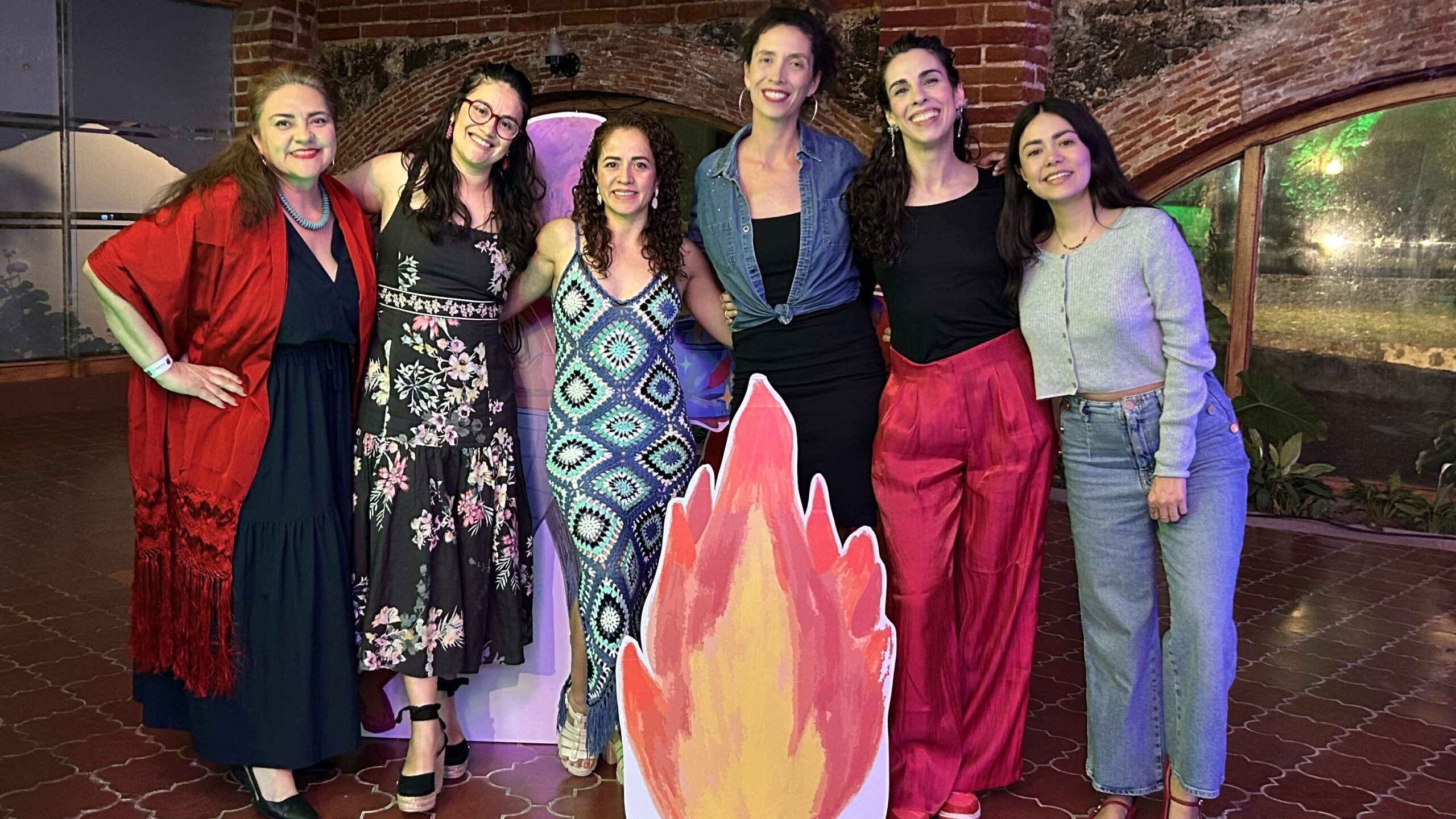
After the gathering, I sat down with the team that worked to make this gathering possible, my colleagues, Paola Feregrino, Marcela Buzo, Brenda Pedroza, and Ayelén Amigo, to understand how they experienced it from the inside.
The barter nobody knew they needed
The idea of handing the workshops over to the organizations themselves wasn't easy to accept internally. Marcela admitted, "when the idea was first proposed, I had a lot of resistance, because I didn't know how it was going to look. It wasn't how we'd been doing things."
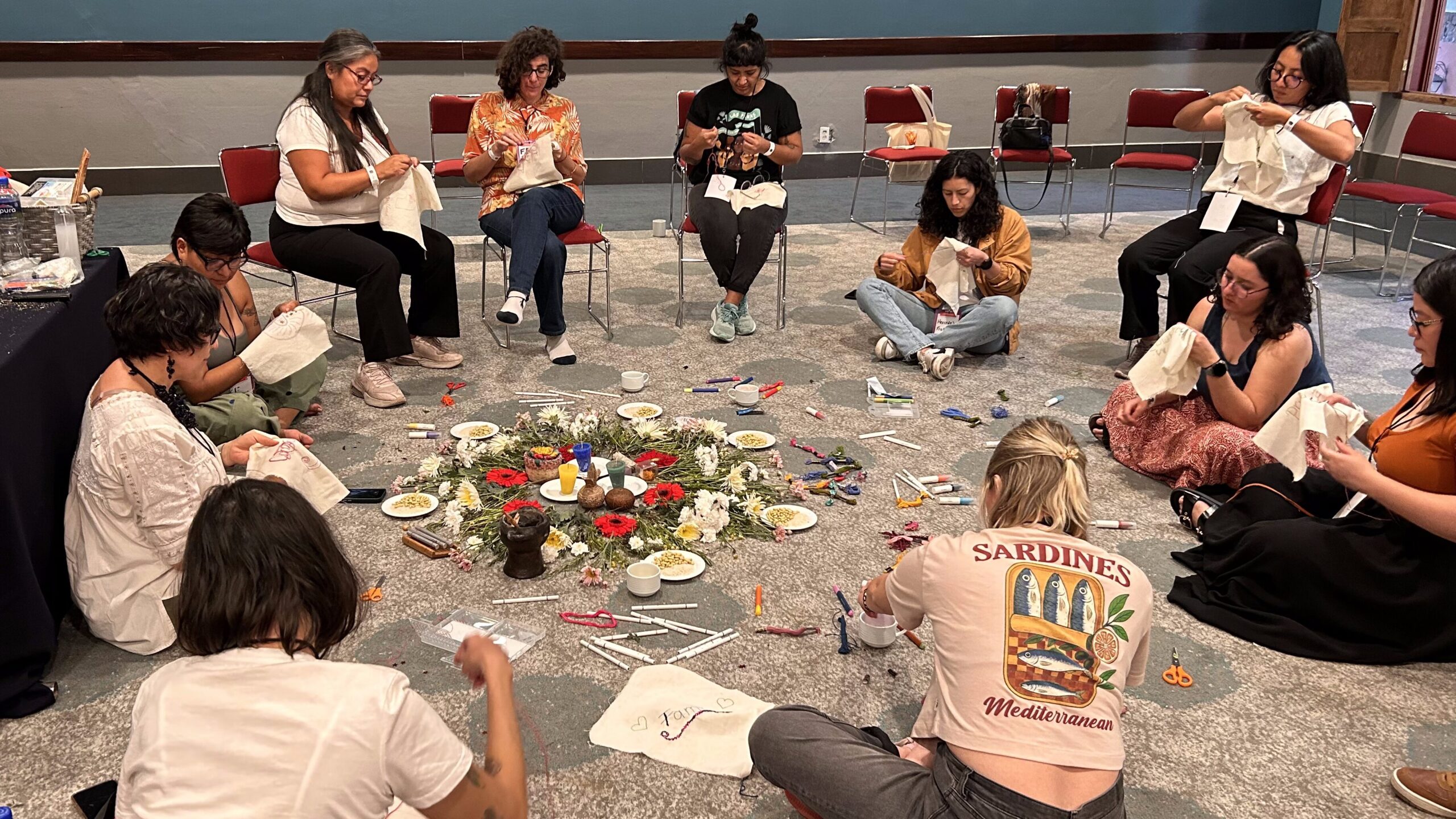
The workshops were spread across four blocks throughout the gathering. With topics that included organizing for safe abortion access led by Las Libres, art as self-care led by Colectiva Rosa Luxemburgo, transfeminist media activism led by Luchadoras, and body eroticization led by Brigada Callejera. There was even a home organic gardening workshop facilitated by Colectiva Lol Kum por Mujeres.
Paola shared that "the organizations did everything really well and the activities exceeded expectations." Marcela actually ended up convinced "my expectations were surpassed. I’m grateful our team pushed me out of my comfort zone."
"When the signs went up, I got goosebumps"
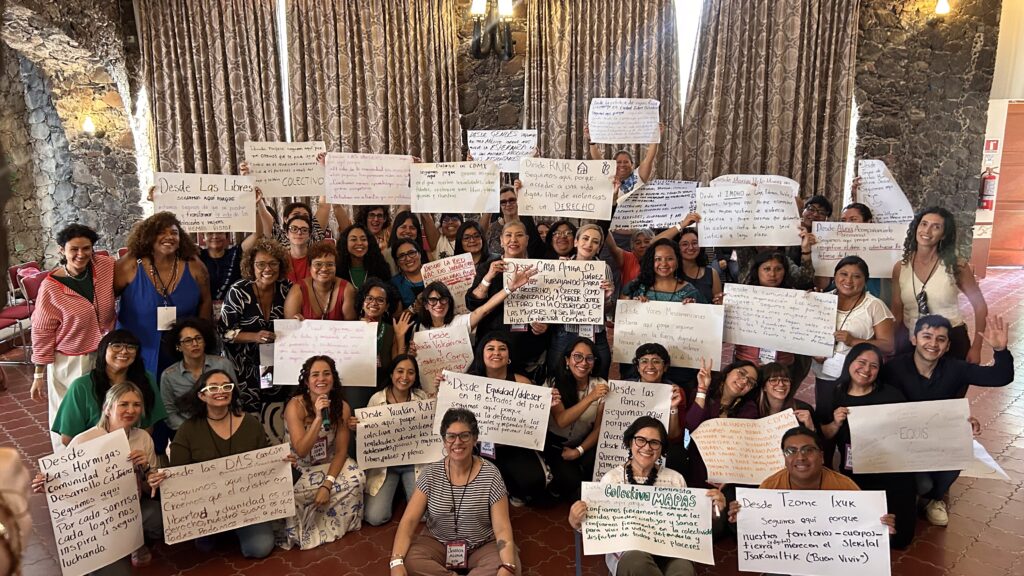
The meeting's first session opened with a dynamic rarely done in spaces like this: a human map. Participants physically placed themselves in the space according to their territories, their struggles, their identities. The idea was to visualize, all at once, the enormous diversity of voices present in the room.
Paola recalls the moment precisely. "We had imagined that dynamic hoping it would be emotional, that it would feel collective. I think it worked. When the signs went up and someone shouted a feminist chant, I got goosebumps — thinking to myself that this is even more beautiful than I imagined.”
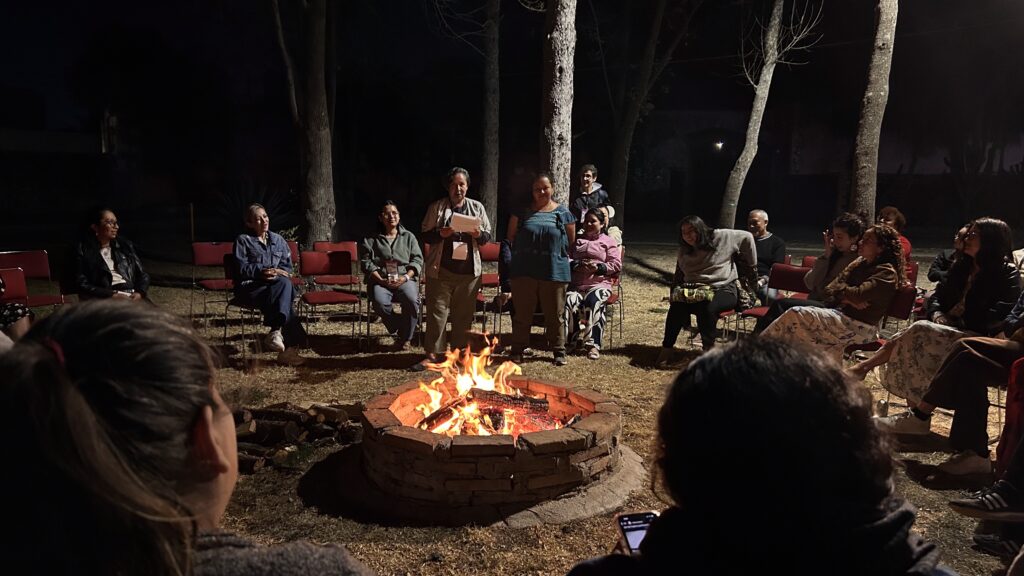
The other image that stayed with her was more intimate, the bonfire night, when partners shared "stories they wouldn't put in a report." "The echoes of laughter stayed with me in my body. That joy of listening to them and being in a space of trust, calm, and warmth."
Brenda agreed about the bonfire, but added something more: "I loved seeing how they began to look back with love and appreciation at things that, at the time, were difficult. That they don't lose their sense of humor in the face of conflict. That struck me as something really beautiful. When I saw them laugh at themselves I thought, "not everything is darkness and despair.”
The gender team agreed that Jennifer Chavez's participation, our Interim President and CEO, was very meaningful given how closely present she was throughout the spaces. Paola noted, "I'll always remember seeing her in a workshop, taking part in a collage exercise, cutting things out and listening attentively to the partners." It also underscored that these spaces, when experienced together, can be transformative for everyone involved in HIP — not just the gender justice team.
Finally, the team recalled the dancing and celebration at the closing event. Brenda reflected, "that was the culminating moment — it was very moving to see all the participants enjoying the celebration and the dancing so much."
What money does when it reaches the right hands
Marcela highlighted something that you can only see if you're in the room. She shared that during the Colectiva Rosa Luxemburgo workshop, "hearing a woman who, drawing on her experience in the maquiladora, built a path as a lawyer defending other women, and seeing her as a leader shows us just how deep the transformations of our partners run."
For Brenda, who works in the program's administrative side, the meetings are a kind of oxygen. "At every meeting, someone comes up to me and says: 'Oh, you're Brenda, the one who asks me for the documents.' Having them see that behind-the-scenes work fills me up. Getting to listen to them, see them, feel their energy, and admire them renews me."
Paola, for her part, noticed something new in this edition: this time, a more diverse range of people from the organizations' teams participated. While those in coordination or leadership roles often attend, this time other voices joined as well including people just starting out in organizational work. It validated her that HIP can be a meaningful space where grantee partners, regardless of role or experience, can feel accompanied and supported.
Feminisms in the plural, necessary discomforts
One of the most interesting moments of the meeting was the panel "Feminist Narratives Today: Uncomfortable Questions," featuring Reflexión y Acción Feminista, Las Vanders, Volcánicas, and Morras Help Morras. The team shared that it wasn't easy. It was exactly what it promised to be.
"The entire panel on feminisms made me reflect deeply," says Marcela. "It took courage to hold that panel because these are complex and uncomfortable conversations. For me it was a huge learning experience."
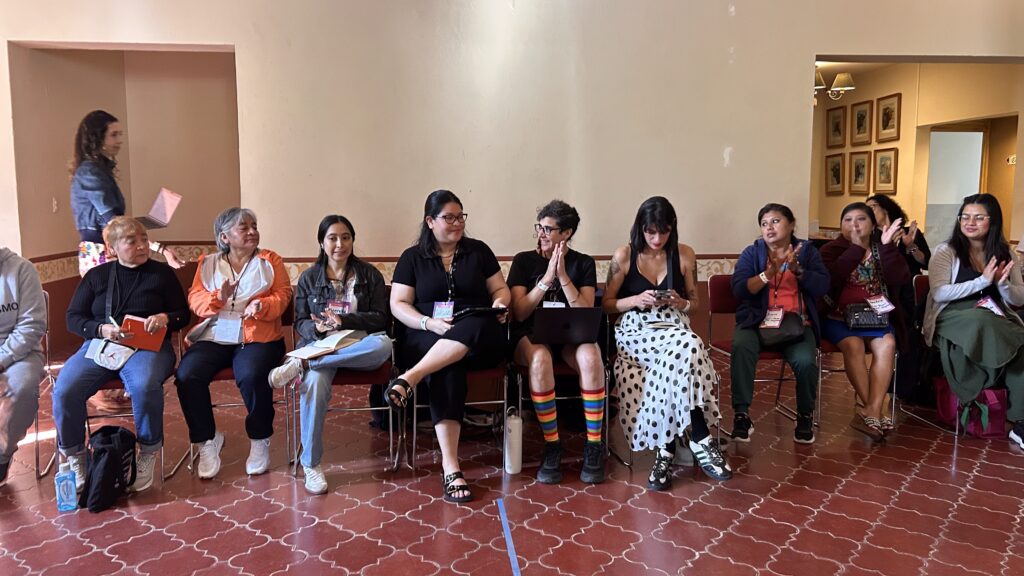
This time, we were also joined by partner organizations from Brazil. For Paola, their participation opened up another line of reflection: "In many of their contributions, our colleagues from Brazil brought the dimension of racial equity to the table, which greatly enriched the space and left me thinking. It made it clear to me that, as an ecosystem, we still have ground to cover on racial justice and that we need to integrate it more intentionally into our conversations and practices."
Rest as a political act
Throughout the week the agenda clearly reflected the commitment to joy and rest and was held to the regard of the workshops.
Sessions with traditional medicine healers were available throughout the day. Tai chi in the garden at dawn, workshops focused on relaxation, and access to spaces dedicated to disconnection.
Paola explained, "what I appreciated was that we stopped talking about care only in theoretical terms and started incorporating it in practice. Not as another space to reflect on the topic, but as a concrete way of sustaining the meeting — as an action."
Marcela linked it to the reality of the organizations: "Many organizations live with a very normalized level of stress. Some partners, like Brigada Callejera or Las Panas, have told us that these meetings become a real breath of fresh air — a space where they can, for a moment, slow down and feel held."
As part of HIP's communications team, my role at these meetings is a peculiar one. I'm not part of the organizing team — that's the Gender Justice team — but I'm not a participant either. I occupy a middle ground that allows me to see from both inside and outside at once. Speaking directly with partners, I've been able to witness that these spaces are genuinely meaningful to them: they allow for horizontal connection, free from pressure, with other organizations in Mexico's feminist civil society ecosystem. And I believe the Gender Justice team understood that this connection could go further, that it could become an intentional exchange of knowledge and stories.
What became obvious after these three days is that the knowledge sustaining the feminist movement in Mexico doesn't live in reports or budgets. It lives in experiences, in stories, in the bodies of these women. It is a living archive that updates itself every time someone dares to share what went wrong, every time a conversation extends past a panel's end. The meeting was a reminder that sharing this — without hierarchies, without performance — is also a way of doing the work. The movement sustains itself this way too.